
Core Curriculum: Required for All Level 1 Crafts
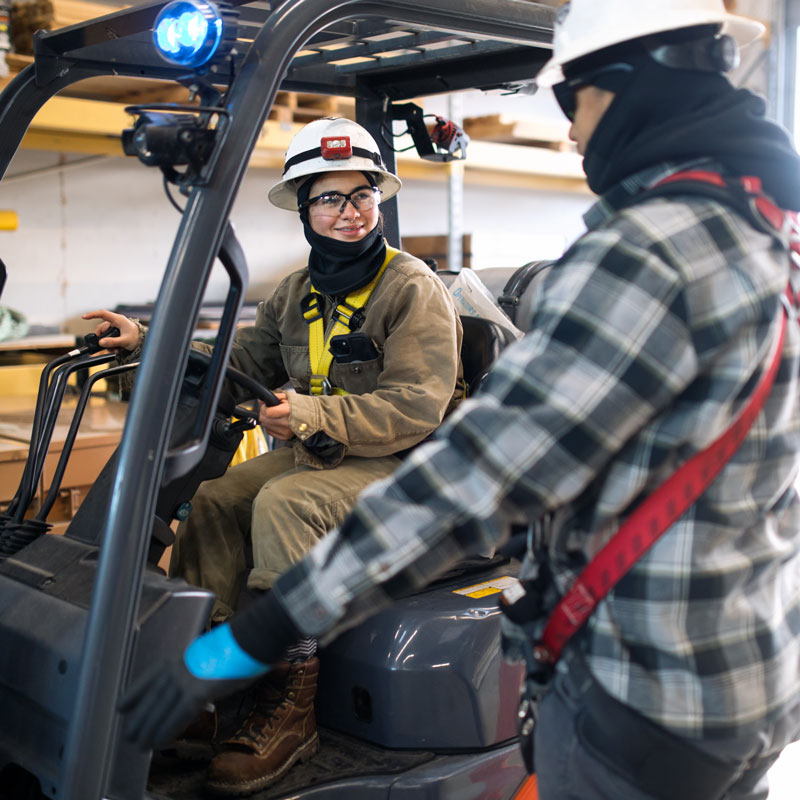
Safety
Explains the safety obligations of workers, supervisors, and managers to ensure a safe workplace. Discusses the causes and results of accidents and he dangers of rationalizing risk. Reviews the role of company policies and OSHA regulations in maintaining a safe workplace. Introduces common jobsite hazards and protections such as lockout/tagout, personal protective equipment (PPE), and HazCom.
Build Your Future
Construction is an exciting, well-paying industry that offers an abundance of career opportunities. With a growing need for individuals who are ready to learn while getting paid, it provides a great fit for people of all backgrounds, skills, and strengths. Carpenter, pipefitter, welder, electrician, and crane operator are just a few of the construction professions in high demand. This module will help you understand the state of the industry, the job opportunities that currently exist, and the training options that will lead you on a path to your new construction career.
Hand Tools
Introduces trainees to hand tools that are widely used in the construction industry, such as hammers, saws, levels, pullers, vises, and clamps. Explains the specific applications of each tool and shows how to use them properly. Also discusses important safety and maintenance issues related to hand tools.
Material Handling
Recognizing hazards associated with materials handling and explains proper materials handling techniques and procedures. Also introduces materials handling equipment, and identifies appropriate equipment for common jobsite tasks.
Communication
Provides trainees with techniques for communicating effectively with co-workers and supervisors. Includes practical examples that emphasize the importance of verbal and written information and instructions on the job. Also discusses effective telephone and e-mail communication skills
Drawings
Familiarizes trainees with basic blueprint terms, components, and symbols. Explains the different types of blueprint drawings (civil, architectural, structural, mechanical, plumbing/piping, and electrical) and instructs the trainees on how to interpret and use drawing dimensions.
Math
Reviews basic mathematical functions such as adding, subtracting, dividing, and multiplying whole numbers, fractions, and decimals, and explains their applications to the construction trades. Explains decimal-fraction conversions and the metric system using practical examples. Also reviews basic geometry as applied to common shapes and forms.
Rigging
Explains how ropes, chains, hoists, loaders, and cranes are used to move material and equipment from location to another on a job site. Describes inspection techniques and load-handling safety practices. Also reviews American National Standards Institute (ANSI) hand signals.
Employability
Identifies the roles of individuals and companies in the construction industry. Introduces trainees to critical thinking, problem solving skills, computer systems, and their industry applications. Also reviews effective relationship skills, effective self-presentation, and key workplace issues such as sexual harassment, stress, and substance abuse.
Power Tools
Provides detail descriptions of commonly used power tools such as drills, saws, grinders, and sanders. Reviews applications, proper use, safety, and maintenance. Many illustrations show power tools used in on-the-job settings.